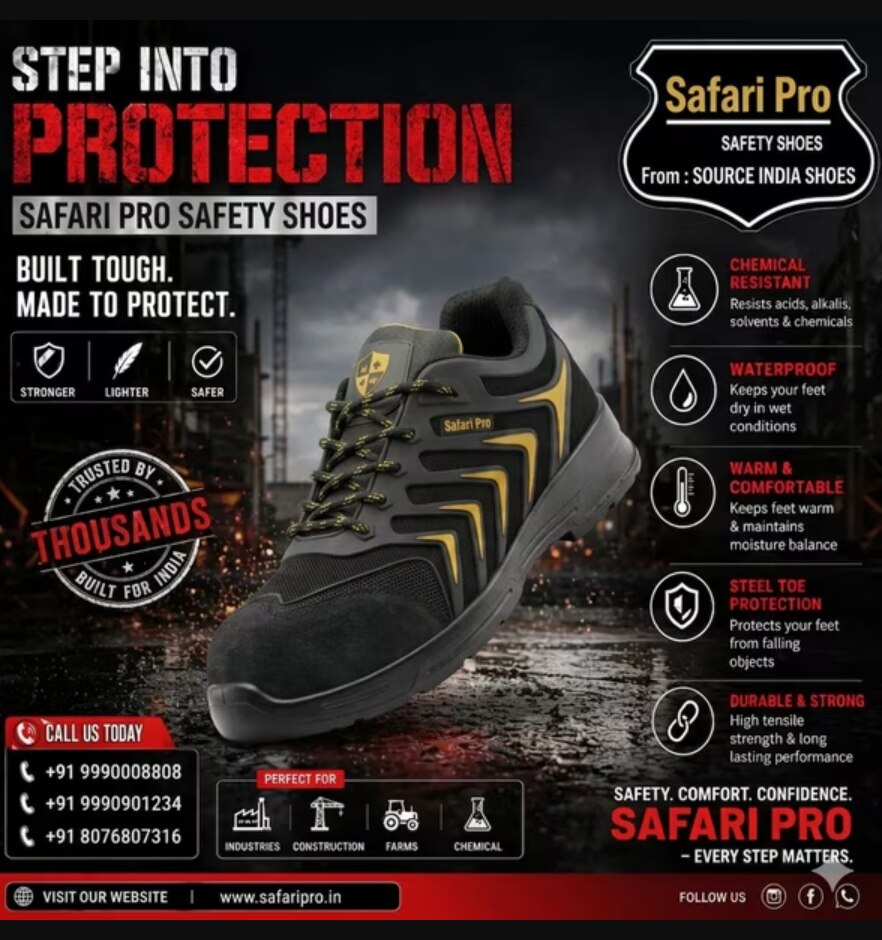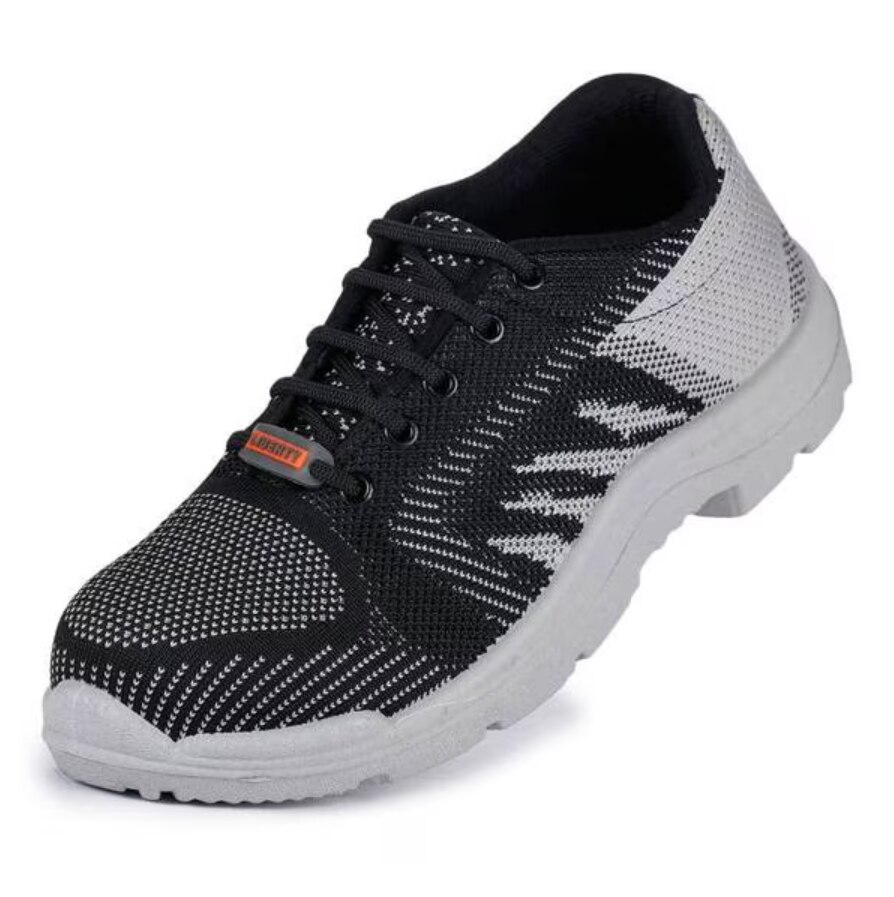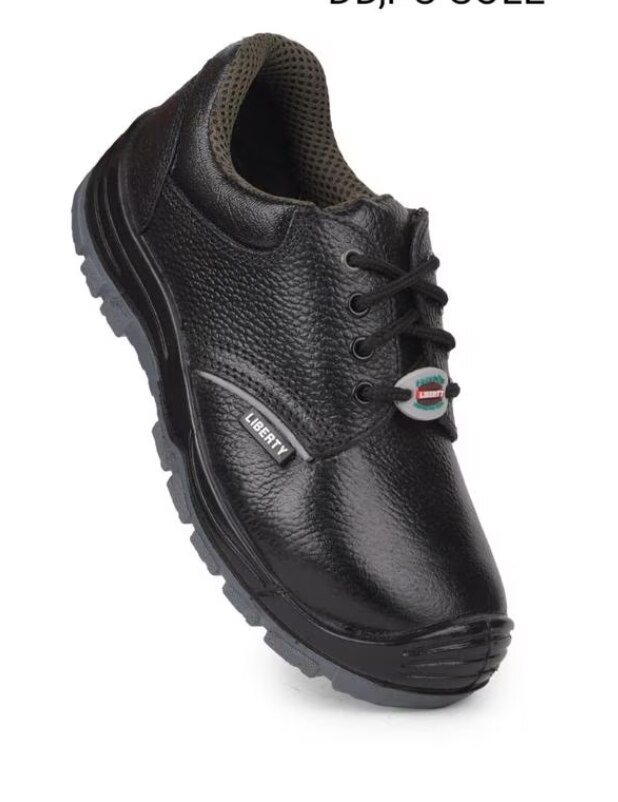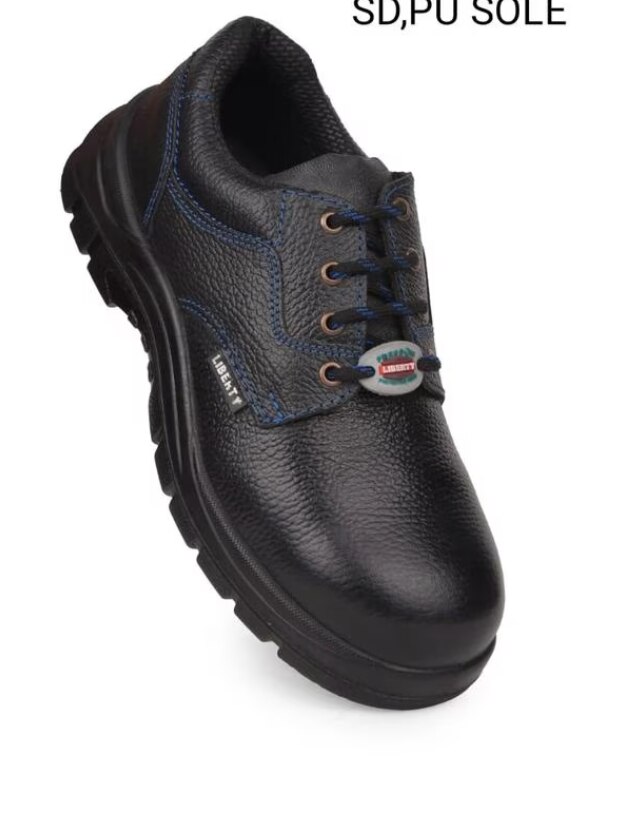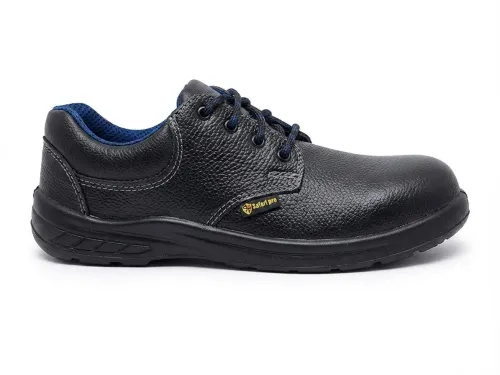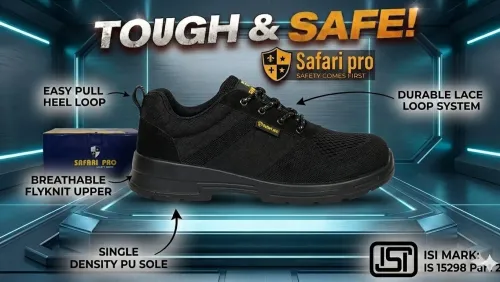
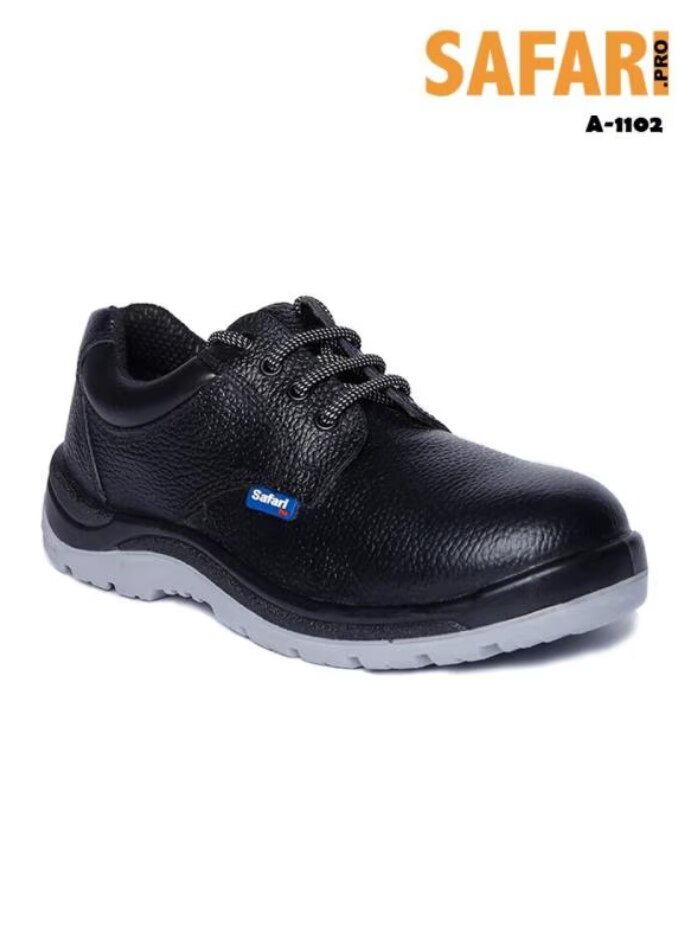
Grip loss can come from blocked tread, oil contamination, hardened polyurethane, worn patterns, loose bonding or a floor that demands a different sole specification. By checking the outsole, cleaning it correctly, matching the shoe to the surface and documenting the failure, you can decide whether the problem is temporary, a product defect or a case for Safari Pro A 1102 replacement.
Key takeaways
- Test grip on a clean, dry, comparable floor before judging failure.
- Clean the outsole and repeat the same-surface test.
- Match outsole specifications to water, oil, ceramic, or workshop contaminants.
- Record photos, batch details, floor conditions, and test results for replacement claims.
What Safari Pro A 1102 grip problems look like
A genuine Safari Pro A 1102 grip problem repeats on a clean, comparable surface; a shoe that feels different only on smooth ceramic has not yet failed. Test the pair on a dry, clean floor, then repeat on the same floor with controlled water or the actual workplace contaminant.
Oil, detergent residue, cement slurry, loose dust, metal swarf and water do not create the same slip pattern.
Look for these signs:
- The heel slides or the forefoot skids during a normal step on a surface that previously felt secure.
- Traction disappears on both shoes, rather than only when one foot lands on an isolated wet patch.
- The shoes slip on a dry floor after the floor and outsole are visibly clean.
- The tread leaves smooth contact patches, or the wearer feels a sudden change between left and right steps.
- The outsole edge lifts, the sole separates, or a crack changes how the shoe flexes.
- Slipping began after exposure to oil, slurry or detergent and remains after the contaminant is removed.
Stop using the pair on the affected task while you investigate. Clean the floor and compare with a suitable alternative shoe; otherwise a spill-control failure can look like footwear failure.
For a new pair that slips immediately on a clean, wet, smooth floor, photograph both outsoles and record the size, purchase date, batch or lot marking, floor material and contaminant. Keep the pair as evidence instead of wearing down the tread.
Inspect the outsole before you blame the floor
A clean outsole with open grooves and intact edges should not look like one packed with mud, coated in oil, or damaged by aging. Inspect it under good light, flex the shoe, and compare both soles before blaming the floor.
| Condition | Inspect for | What it means |
|---|---|---|
| Blocked tread | Mud, cement paste, compacted dust or gravel filling the grooves | The pattern remains visible, but its channels cannot evacuate water or maintain full contact. |
| Normal wear | Tread blocks gradually flattened across the main contact areas, with no cracks or separation | Grip has reduced through use; smooth patches indicate the pair is approaching replacement. |
| Hardened polyurethane | Glossy rigid surface, edge cracking, powdering, sticky residue, crumbling or separation between layers | Aging from oxidation, hydrolysis or heat has reduced elasticity, even though the tread pattern remains. |
| Contamination | Oily or greasy film, chemical residue, wet cement, or a dark coating over the tread faces | The outsole material may be sound, but the contaminant is acting as a lubricant. |
| Physical damage | Deep cuts, torn lugs, exposed midsole, detached edges, punctures, or embedded metal or glass | The sole cannot maintain consistent contact and may admit water or fail structurally. |
Do not confuse a two-layer polyurethane construction with proof of slip resistance. If the tread is open and clean but the outsole feels hard, shows cracks, or separates at the edge, cleaning will not restore its original grip.
Remove the pair from service when damage exposes the midsole or creates uneven contact between left and right shoes.
Clean the sole, then test the same surface again
Start by identifying the contaminant, not by repeating a generic wet-floor test. For Safari Pro double density safety shoes, remove loose dust, cement slurry, metal swarf and other debris before judging the outsole; oil, water, detergent residue and smooth ceramic surfaces require separate checks.
- Brush off dry dust and loose grit with a stiff nylon brush.
- Remove metal swarf or glass with pliers or a scraper, wearing cut-resistant gloves.
- Blot oil first, then scrub the outsole with warm water and a small amount of mild detergent.
- Rinse until no slippery film remains, and let the sole dry completely away from direct heat.
Do not use petrol, diesel, paint thinner, acetone or other strong solvents. They can swell, harden or weaken polyurethane, including the softer upper layer and the denser outsole layer.
Test the cleaned, dry pair on the same floor area and with the same contaminant identified during the original incident. If grip returns, correct the spill or housekeeping failure as well as cleaning the shoes; footwear cannot compensate for oil, standing water or detergent left on the floor.
Washing will not restore traction when the tread is polished or worn away, the outsole has hardened, cracks expose the midsole, an edge is separating, or contamination remains embedded. It also will not make an unsuitable smooth ceramic, oily workshop or metal surface safe.
Remove the pair from service and use an alternative slip-resistant shoe while the cause is investigated.
Match the sole specification to the work surface
A Safari Pro A 1102 is not automatically suitable for every floor labelled “slippery.” Approve it only against evidence for the surface and contaminant your worker will encounter.
| Work surface | Decision point | Evidence to request |
|---|---|---|
| Polished tile | Treat as high risk, especially with water or detergent film | Wet smooth-ceramic test results |
| Wet concrete | Suitable only if the tread channels water and the test covers wet concrete | Test medium, surface finish and result |
| Oily workshop | Do not rely on “slip-resistant” wording; oil, grease and cutting fluid behave differently | Results for oil or the actual fluid, plus the outsole’s oil-resistance rating |
| Loose gravel | Tread may bite, but rolling stones can destabilise the foot | Tread pattern, lug depth and uneven-ground guidance |
| Ladders | A general slip test does not prove secure rung contact | Heel-breast shape, ladder-use guidance and edge-grip evidence |
| Metal grating | Open grating needs tread edges that contact narrow bars without snagging | Test or guidance for wet steel grating |
Ask for the complete model specification, outsole material, tread drawing, test standard, contaminant, floor material and pass result. A certificate that only says “anti-slip” is not enough.
- Record whether the floor held water, oil, detergent, cement slurry, dust or swarf.
- Request the outsole lot or batch number and the laboratory report for that production version.
- Keep a new pair that slips on a clean, wet smooth floor as evidence; photograph the tread before continued wear.
No test report proves grip on every plant floor. Maintain spill control and provide alternative footwear while you investigate.
When to request a replacement and what to document
Remove the pair immediately after a repeat slip on a clean, wet or oily surface, heel slide, sole separation, exposed midsole, deep cracking or sharply uneven wear. Provide an alternative slip-resistant pair and correct the spill or housekeeping problem; footwear cannot compensate for oil, cement slurry, loose dust, poor drainage or an unsuitable floor.
Do not wear a newly purchased pair until its tread is polished if it slips on the first controlled check. Preserve it as evidence and record:
- Model, size, left and right shoe markings, purchase date and invoice number.
- Outsole lot or batch marking and production date, if present.
- Clear photographs of the tread, bonding perimeter, defects and both shoes together.
- The exact surface and contaminant: water, oil, detergent, cement slurry, dust, mud, metal swarf or ceramic.
- Worker, location, date, test conditions and whether comparable pairs passed.
- Cleaning performed, its result and any injury, near miss or work stoppage.
A single complaint does not prove that safari pro a 1102 shoes losing grip in gautam buddh nagar is a geographic product defect. Compare pairs from other cartons and separate local contamination from a batch pattern.
Request a Safari Pro A 1102 replacement as a matched pair, not one shoe; unequal tread wear or hardness can destabilise the worker. For repeated failures, request a complete batch review. Ask Safety Shoes Manufacturers or the supplier for the exact model, batch traceability, slip-resistance test report, warranty period, claim process and exclusions.
Related product
 | Double Density Safety Shoes ₹1199 safety shoes In Delhi safety shoes In Agra safety shoes In Noida safety shoes In Jaipur safety shoes In Lucknow safety shoes In Kanpur Manufacturers,... View product → |
Frequently asked questions
How can you tell whether Safari Pro A 1102 shoes have a grip problem?
Test both shoes on a clean, dry, comparable floor, then repeat on the same surface with controlled water or the workplace contaminant. A genuine problem repeats across comparable tests.
What should you inspect on the outsole before blaming the floor?
Check the tread for wear, contamination, embedded debris, detached areas, cracking, and uneven contact. Inspect both shoes because one damaged outsole can change how the pair feels.
How do you clean Safari Pro A 1102 soles before retesting grip?
Remove stones and embedded debris, wash off the contaminant with suitable cleaning materials, dry the outsole fully, and retest on the same surface under the same conditions.
How should you match a safety shoe sole to a work surface?
Compare the sole specification with the actual hazard: dry floors, water, oil, smooth ceramic, dust, metal swarf, and other contaminants require different traction priorities. Do not treat a general slip rating as proof of grip on every surface.
What should you document when requesting a Safari Pro A 1102 replacement?
Record the purchase date, pair or batch details, outsole photographs, cleaning method, test surface, contaminant, weather or floor conditions, and the repeated test result.
Keywords